
the life you were meant to live
9 books on living up to your ideals ✦ and how to betray yourself (in love, art, writing, thinking)

For the educated and ambitious, the two most obvious templates for how to live are:
Become a high-achieving professional—especially in law or finance (in the ‘90s) or tech (now), where you affiliate yourself with one prestigious organization after another, and use your disposable income to acquire strategic lifestyle experiences: a two-week trip to Japan, an Equinox membership, and Le Creuset cookware that never gets used (because you’re always getting sweetgreen near the office)…
And sometimes you remember that, in undergrad, you really loved art history/literature/insert-another-subject-that-you-ended-up-leaving-behind, because it didn’t make enough money. But someday you’ll have enough (relatedly, is Anthropic still hiring?) and then you can do what you really want, though maybe that’s an illusory ideal (because you like having stakeholders and action items more than you’d admit). And also: you’d rather not have roommates at the age of 30.Become an artist/writer/academic—because you’ve seen so many of your idealistic peers go into office jobs where they draft emails and PRDs, instead of the poems they used to write in school. You refuse to give in; you refuse to think that the life of the mind can be sacrificed for the fleeting and illusory pleasures of—what? Buying more things? (You are envious of your friends buying homes, though.)
And you can’t let go of the total serenity, peace, and resolve that washes over you whenever you sit down to work. It feels like a gift to do what you love, not just what you can tolerate. But the money matters more than you’d like to admit, and sometimes you wonder if there’s another way to live that doesn’t involve such terrible tradeoffs, that doesn’t make you feel like the only options are to: sell out, or feel an ongoing and unresolvable sense of precarity.
It seems to choose a path, and commit to it (though choices aren’t permanent: they can always be revisited, remade). But how, exactly, do you know which one is right?
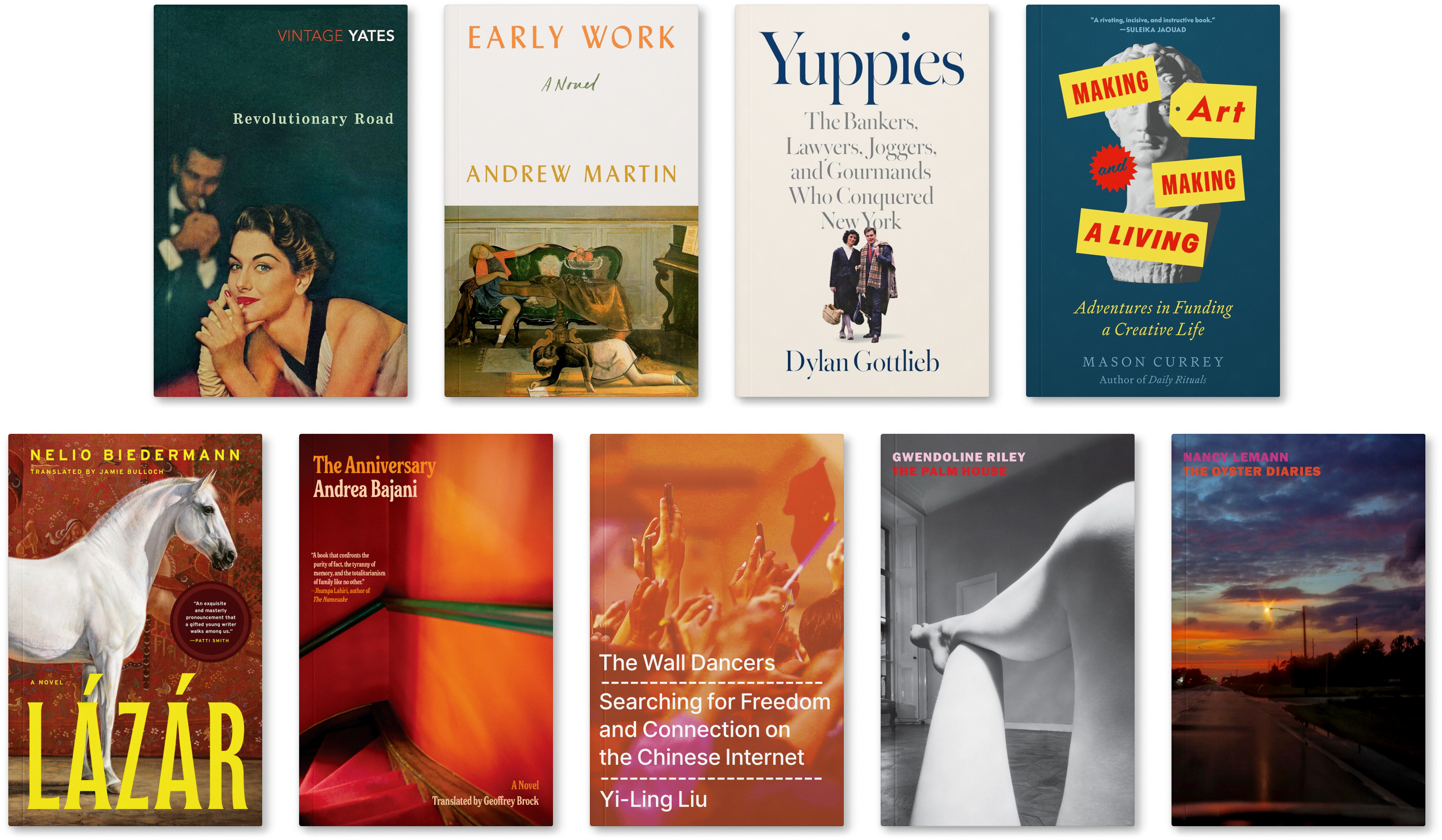
“Our lives are so tragically short,” the writer Catherine Shannon observed, “and the only way to live other lives is through reading.” And these encounters with other lives—in fiction or nonfiction—might offer lessons for what to do ourselves.
Below, brief reviews of 9 usefully revelatory books:
2 novels about struggling with the life you’ve chosen (Richard Yates’s Revolutionary Road and Andrew Martin’s Early Work)
2 nonfiction books about making money and changing the cultural landscape (Dylan Gottlieb’s Yuppies and Mason Currey’s Making Art and Making a Living)
1 nonfiction book about contemporary Chinese sci-fi, tech, art, and feminist activism (Yi-Ling Liu’s The Wall Dancers)
2 new translated novels about how our family histories shape our present (Andrea Bajani’s The Anniversary and Nelio Biedermann’s Lázár)
and 2 novels about midlife—crisis? or uncertainties? (Gwendoline Riley’s The Palm House and Nancy Lemann’s The Oyster Diaries)
If you’re a new-ish subscriber, hello! I’m a software designer and writer from California, and personal canon is a newsletter about the life of the mind in the 21st century. This is newsletter #59.
I’ve also written about design thinking (for The Atlantic), conspiracy theories (for the Cleveland Review) and Sheila Heti’s use of spreadsheets (for ArtReview).
The right (or wrong) way to live
Earlier this summer, I read 4 books about the distinctive pleasures, and consequences, of choosing one life over another:
How to betray yourself
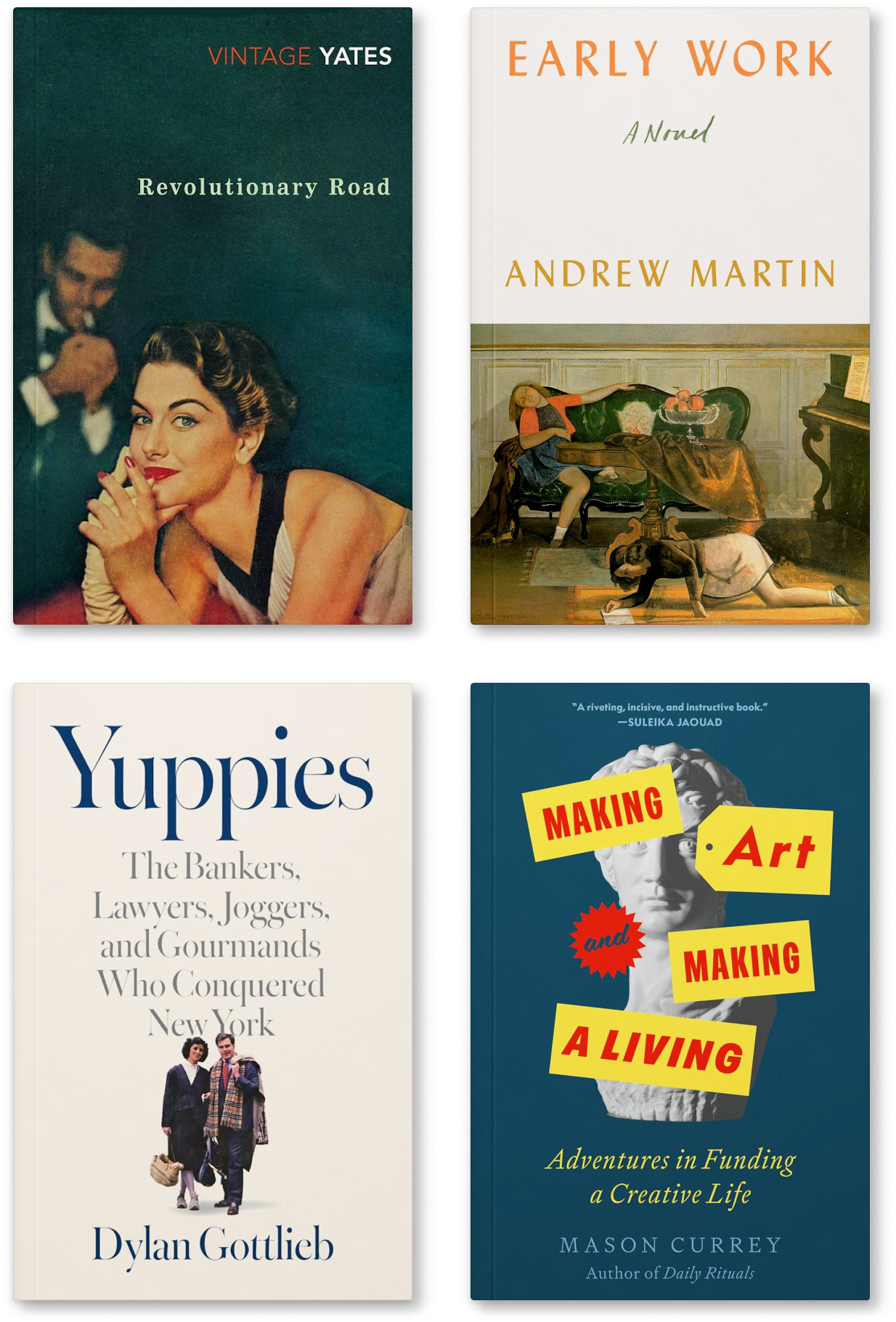
Richard Yates’s Revolutionary Road, which came out in 1961, is about an American couple—Frank and April Wheeler—whose youthful aspirations have been subsumed by the usual constraints: children, a mortgage, and a corporate job. The novel is, as the literary critic James Wood wrote, “the decade’s great, terrifying indictment of suburban surrender.” In Wood’s description, Frank Wheeler works a day job, “but prides himself that he takes his job ironically, that he cares nothing for it.” With the critic’s usual blend of insight and savagery, Wood adds:
He is saving himself for an invisible “creative’” life that he is too unimaginative to envision.
Frank’s wife, April, isn’t content either. The two have terrible fights and awkward reconciliations—a pattern that seems to be broken, briefly, when April develops a plan to escape suburbia and start anew. They could, she suggests to Frank, move to Paris. They could separate themselves from the parochialism of their neighbors. They could actually live out their dreams.
It seems, initially, like this is the right move for the Wheelers. And as Frank looks back at his life, he thinks:
Wasn’t it true, then, that everything in his life from that point on had been a succession of things he hadn’t really wanted to do? Taking a hopelessly dull job to prove he could be as responsible as any other family man…having another child to prove that the first one hadn’t been a mistake, buying a house in the country because that was the next logical step and he had to prove himself capable of taking it.
But it’s harder than it looks to leave your stultifying suburban life behind—even if it’s to chase your dreams! You need to figure out, in the first place, what those dreams are. And then prove yourself equal to them.
The great, terrible, tragic thing about Revolutionary Road is that the Wheelers aren’t quite capable of this task. But reading about their struggles may help others do better. The novel, according to the writer and psychotherapist Edward Marriott, is “one of the best novels ever written about the difficult but necessary work of finding out who one really is—and living life accordingly.”
One potential lesson you could take, from Yates’s novel, is that there’s something inherently suffocating about working a corporate job and raising a family. Why not be free of all that and reject society’s norms? Why not live a more bohemian–intellectual–artistic experience?
There are difficulties with that approach, too, as Andrew Martin’s Early Work shows. The protagonist, Peter, is a writer and PhD dropout whose college girlfriend, Julia, is now in medical school and feverishly writing poems in her spare time. Peter, who has followed Julia to Virginia, is much less disciplined. He teaches part-time and lives off of some cash that his parents set aside, “nominally for the purpose of buying a house or funding a legitimate offspring someday.” He works on a book (which, he acknowledges, is more precisely described as “hundreds of Word documents that bore a vague thematic resemblance to each other, but would never cohere”). He spends most of the novel trying to have an affair with Leslie, a “clever, unconventionally beautiful woman” that he meets in the opening scene.
Affairs! If you don’t know what to do with your life, and you can’t even commit to the things already in your life—partners, artistic projects, ethical principles—then why not have an affair? It’s a great way to give your life some narrative momentum and intrigue. And Martin’s novel is very well-written, too—funny, penetrating, dynamic—that I found myself much more sympathetic to Peter than I otherwise would be.
It helps, too, that this is a book populated by many other books (as novels about writers tend to be): as the characters careen around, making a mess of their romantic obligations to each other, they also namecheck novels by Robert Musil, Cormac McCarthy, Thomas Mann. These are well-read characters, which doesn’t save them from making disastrous decisions—if anything, their insistence that they are writers, which makes them different in how they live and love and labor, may be exactly why these disasters happen.
They’re self-aware about it, at least. Near the end of the novel, when Peter belatedly attempts to resolve the love triangle he’s created for himself, he thinks:
Maybe I could be happy without Leslie, if she went away. I’d been happy, or happy enough, before I met her. I still loved Julia. That wasn’t really in question. I had plenty of love. It was, I was realizing, a callous kind of love. That seemed to be all I had to give…Other people were interesting, and the more privileged time you had with them the less bored you would be. They would teach you how to live, or at least entertain you while you failed to learn.
I loved Early Work, and so did the writer Molly Young, who described it as a “tidy and perfectly ornamented novel…it rewards as much attention as you want to give it.”
Bankers, lawyers, artists, writers
Revolutionary Road and Early Work are, in my mind, about people who try, childishly and ineffectually, to escape from the consequences of their choices. But what if you’d rather not be the tragic hero of your life? How to refuse the burden of the perpetually resentful professional, or the underemployed, unaccomplished writer?
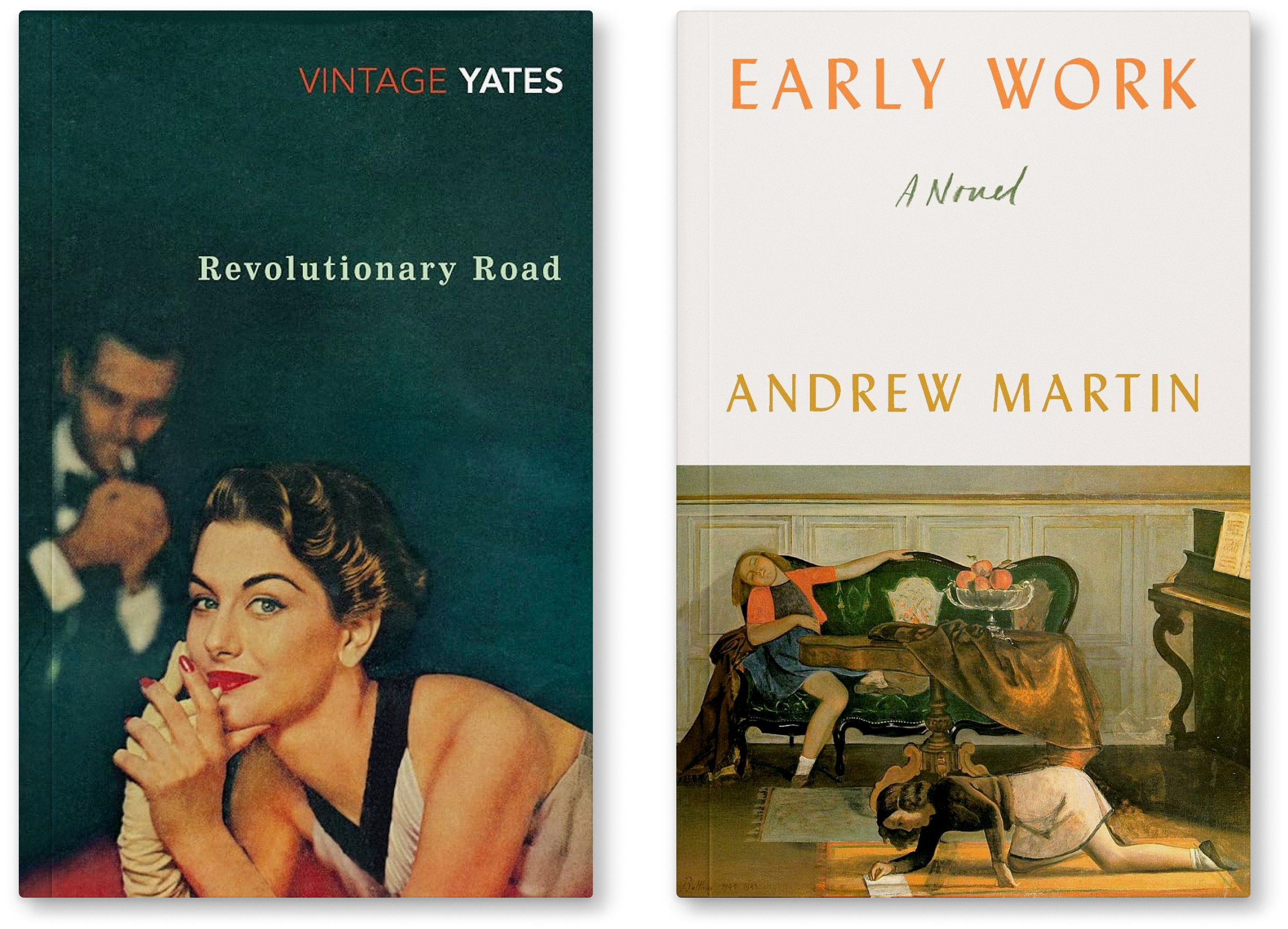
The historian Dylan Gottlieb’s Yuppies: The Bankers, Lawyers, Joggers and Gourmands Who Conquered New York is a magisterial, wide-ranging book about Americans in the 1980s who committed themselves to a particular life. They were, as Gottlieb writes in the intro, “bankers and lawyers who earned high salaries, coveted luxury apartments, trained for marathons, owned Cuisinarts, and supped on sushi, Brie, and chardonnay.” They were more diverse than the WASP-y professional elite of previous decades: many were Jewish, Asian, and (rarely) Black.1 They worked punishingly long hours, but were—usually—paid well for it. And the ways they spent their money (buying and renovating Brooklyn brownstones, dining at Zagat-approved restaurants, and shopping at gourmet grocery stores) reshaped America’s urban landscape and consumer tastes.
If you’re interested in the historical conditions that led to:
Urban gentrification
White-collar workplace culture
Why run clubs are so popular
Why Zabar’s is so popular (and why there are so many overpriced versions of lao gan ma at the “shoppy shops” in your neighborhood, in Emily Sundberg’s memorable phrasing)
Why office workers love restaurant reviews and rankings
How the Democratic party became so popular with liberal Goldman Sachs bankers (leading to ongoing skirmishes about whether the Democratic party is for PMCs or union workers)
—then this is one of the best nonfiction books you could read about these topics. (I’m already drafting my best books of 2026 newsletter—here’s my list for 2025, 2024, and 2023, for reference—and Yuppies is already in it, along with a phenomenal book on Chinese internet culture and politics that appears later on in this newsletter!) I had such a good time reading Yuppies!2 It’s the best kind of university press book: well-researched, highly readable, and relevant to pressing contemporary topics.
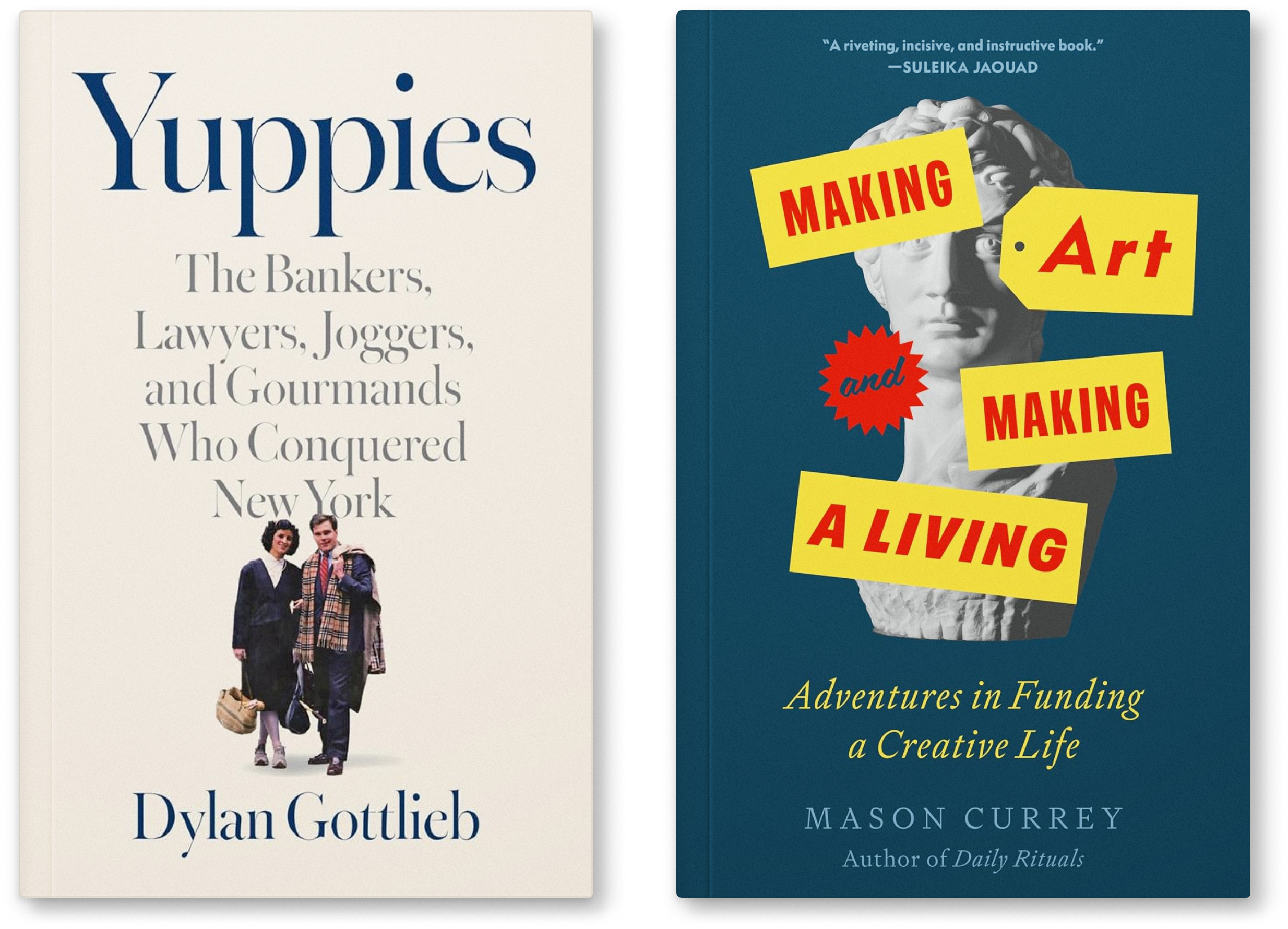
Yuppies is a satisfyingly synoptic portrait of a particular lifestyle: the young, urban professional of the 1980s (and, in many ways, the same archetype in 21st-century America). But for a portrait of a different life, I turned to Mason Currey’s Making Art and Making a Living: Adventures in Funding a Creative Life. Currey is best-known for his Daily Rituals books, which describe the morning (and afternoon, and evening) routines of notable figures, including writers (Kafka), inventors (Tesla), and mathematicians (Erdös).
I’m a devoted reader of Currey’s excellent newsletter, Subtle Maneuvers, which offers useful tactics and necessary encouragement whenever I feel stuck with my work.3 So I was thrilled to read Currey’s Making Art and Making a Living, which tackles—with intrepid specificity and a great deal of good humor—the complicated nexus of money, art, time, and focus.

Currey’s book is organized into 4 sections:
Family money, where we learn about Fernando Pessoa squandering his inheritance and Virgina Woolf carefully preserving hers (with Leonard Woolf’s help)
Jobs, where Currey discusses figures like Roberto Bolaño (a poet and novelist, but also: “dishwasher, waiter, longeshoreman, garbageman, seasonal laborer, and receptionist,” according to his translator Natasha Wimmer) and Octavia Butler (whose list of odd jobs rivaled Bolaño’s: she was a “dishwasher, telemarketer, a warehouse worker, and”—the most unusual—“potato-chip inspector”)
Patrons, where we learn about Petrarch strategically cultivating powerful friends—especially cardinals and bishops—in the 14th century; Haydn’s aristocratic funders; and the many American artists who benefited from governmental largesse during the Great Depression and WWII.
Schemes, where I learned about the filmmaker Jean-Luc Godard’s kleptomania, and the composer John Cage’s side hustle as an expert mushroom forager. By the time he was 46, he was knowledgeable enough to appear on an Italian gameshow and correctly identify every white-spored mushroom and win a 5-million-lire prize (about $90k today, according to Currey’s book). “I have come to the conclusion,” Cage wrote, “that much can be learned about music by devoting oneself to the mushroom.”
Of course money shapes how people make art. But it’s discouraging to spend too much time obsessing over nepo babies who don’t have to struggle, which is where most discussions of art and money land. I loved Currey’s book because it lays out how many paths there are to do meaningful work and pay your rent. It’s a useful book because it discourages passivity. It’s a joy to read about how Cage and others made it work, and imagine how you could make it work.
If you’re interested in these questions and want some podcast-sized (or essay-sized) answers:
SPENT, a podcast by NewCrits, is about the real cost of a creative life—and how to make it work out anyway. “There is a story we tell ourselves,” the producers write, “about the people who seem to have made it…and the story is not kind”:
They must have played the game. Colluded with a corrupt system. Made the right compromises with the right people at the right moments. And so we write them off, and maybe we resent them a little, and we feel that the resentment is justified because the system is genuinely corrupt and someone has to answer for it.
But the truth, at least as I’ve encountered it in years of these conversations, is usually grittier and stranger and far more human than that story allows. The person whose name you know from an “Artists to Watch” list might still be sleeping on a mattress in an empty room. The artist whose work just went into a major collection might be quietly terrified that it was a fluke, that the floor is about to give way, that they have no idea how they got here or how to stay.
While drafting this newsletter, I was listening to SPENT’s third episode with the writer and editor Whitney Mallett:
Emily Cooke’s “Pay to Play” is one of the best short pieces on money/art/privilege/idealism that I’ve ever read. It’s technically a book review, for a 2017 issue of Bookforum—but Cooke uses the form to tackle everything from institutional prestige to coping mechanisms for the unconnected. In her final paragraph, she notes that books about writing and money:
usefully destroy the fantasy that the production of a literary work is unconnected to its writer’s worldly circumstances. But—as I’ve determined over years of research in the field—no level of affluence will ensure that you write a worthwhile book. Consider the laws of the literary few: Having lots of money confers status but having very little confers legitimacy, which offers a different kind of status; having too much is unseemly yet so is having none. The rich and the poor collude in believing that the amount of money you inherit or make means something about your moral fiber, the quality of your art. What will we do when we find out it doesn’t?

What is a family for?
Families—whether they’re rich or poor—can often get in the way of figuring out what you really want to do. In June, I read 2 novels whose protagonists face the inherited beliefs, expectations, and (for one novel) the aristocratic legacy of their families:
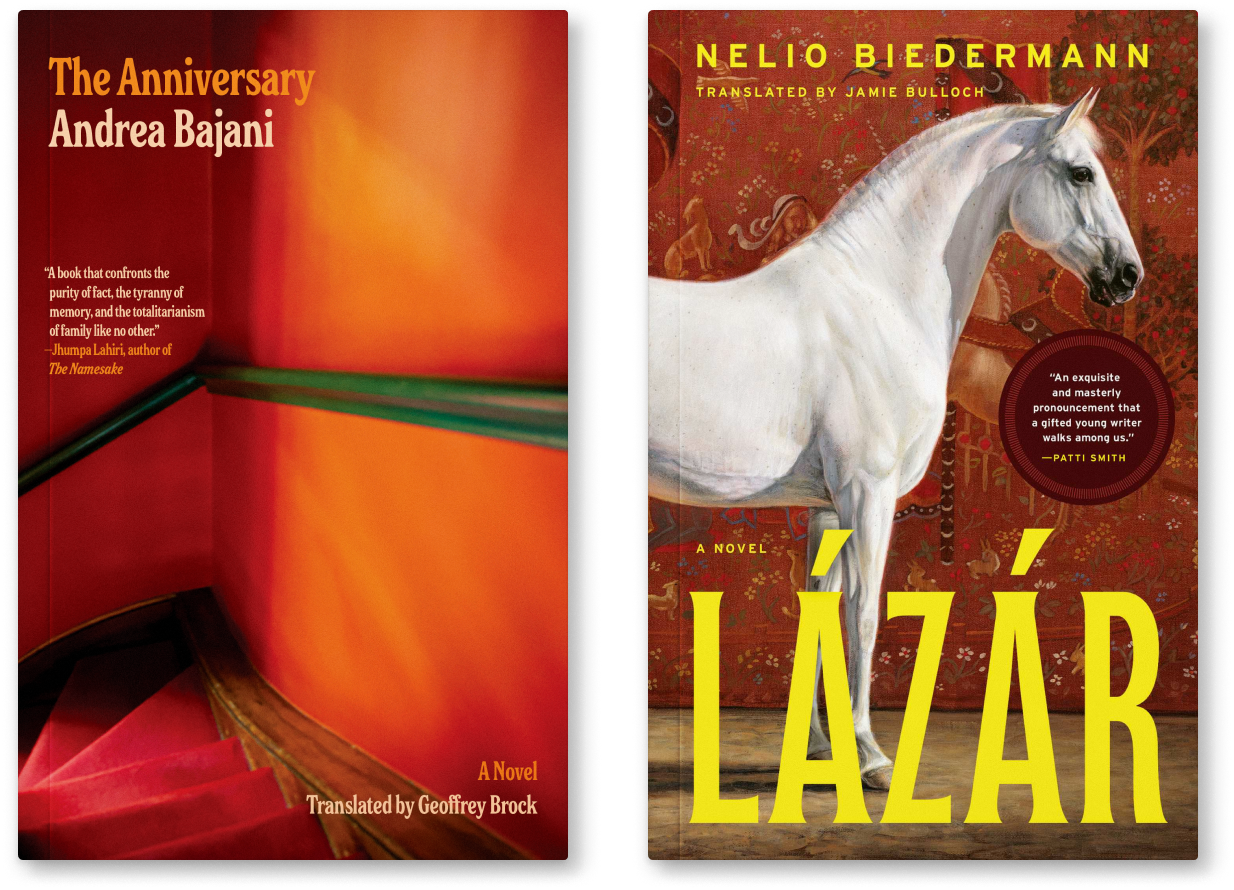
If you’re unfamiliar with the Strega Prize–winning writer Andrea Bajani—whose The Anniversary, won Italy’s most renowned literary prize last summer—a good place to start is “How to Dine Alone,” a short essay in The Believer’s summer issue. Or with an excerpt of The Anniversary in the New Yorker. Or with the novel itself, which is one of the most psychologically penetrating portraits of family dysfunction I’ve ever read. If you’re a fan of the Norwegian writer Vigdis Hjorth, Bajani is one of the few writers who (in my opinion) equals Hjorth in excavating ambivalent and complicated forms of family trauma.
Andrea Bajani’s The Anniversary (translated from Italian by Geoffrey Brock4) opens with 2 epigraphs. The second is from Anne Carson’s “Candor”:
If you are not the free person you want to be you must find a place to tell the truth about that. To tell how things go for you.
The protagonist of The Anniversary is free in theory: the first sentence of the novel begins with “The last time I saw my mother…,” and the chapter concludes with:
On that day, ten years ago, I saw my parents for the last time. Since then I’ve changed phone numbers, houses, continents, I’ve erected an impregnable wall and put an ocean between us. They’ve been the best ten years of my life.
But he is not free in practice: he is trying to understand his parents, and the terrible decision he’s made to cut ties with them, in order to—perhaps?—unburden himself. The rest of the novel is the protagonist unearthing memories of his youth: a domineering and controlling father, a mother “who by nature withdrew from everything,” who had given up her studies and career for marriage. There’s an intriguing inflection point when the protagonist begins to see a psychotherapist, who “offered both warmth and cruelty, caresses and claw swipes, and…had translated the human instinct for gossip into something visionary.” The novel is narrowly focused on a single man and how he understands his parents, but Bajani achieves tremendous psychological insight with this focus.
I also read a new translated novel that takes a more expansive focus: 3 generations of an aristocratic Hungarian family in the first half of the 20th century. The 22-year old Nelio Biedermann’s Lázár was a bestseller when it was first published in Germany last September, and when Jamie Bulloch’s translation came out this spring, the New York Times published both an interview with the author and a review by Elvia Wilk, who described it as “rich with sensory description” and “thrillingly unburdened by conventional stylistic constraints.”
One of the problems with being a literary wunderkind (and international commercial success) is that people begin to ask: Is that guy really any good? In my opinion—he is. I was captivated from the start, perhaps because Biedermann opens his historical-familial-epic by describing an illicit sexual liaison and the resulting illegitimate child. Nothing keeps people reading like a strategic bit of licentiousness!
From there, Lázár shifts smoothly from the more gothic opening third to a more brodernist (non-derogatory) setup: the characters meet, fall in love, marry, and have children against the backdrop of a modernizing and calcifying Europe, and when real historical figures like Leni Riefenstahl (the German filmmaker and Nazi propagandist) show up, I began bracing myself for the usual European-novelistic horrors.
One of the most touching aspects of Lázár is how it narrates World War II and the Holocaust through a more intimate angle. Most of WWII, for example, occurs while a young boy in the family, Pista, is languishing because he’s far away from the girl he loves. In 1944—while Germany is invading Hungary—Lázár offers us a touching description of adolescent obsession:
During Advent, Pista wrote a poem about each part of Matilda’s body. His greatest fear was to forget what she looked like. His second greatest: to never be able to sleep with her.
In an interview with The Cold Magazine, Biedermann said:
I really wanted to focus on my characters’ private lives and show how, at times, the characters care more about their private life than they do about these big historical events.
They are invested in what they can control – their own life and the people they love, how they express love, and also how they betray each other. At the end of the day, I’m not a historian and I’m 22 years old. I don’t have the capacity to say very smart things about these historical events, but I can show how they affected daily life and people. I didn’t live during these times, but I know how families work.
I loved Biedermann’s novel for the same reason that I loved Svetlana Alexievich’s magisterial Secondhand Time: The Last of the Soviets, an oral history of the dissolution of the Soviet Union.
I wrote about Alexeivich’s book in—

Because what comes across in Secondhand Time and Lázár is that history can happen all around you, and yet what you remember is: romance, love, sex, betrayal. And this does feel like a profound accomplishment: that Biedermann can understand this about human nature, and understand that sometimes the best way to understand a historical moment is in the intimate realm of the family.
After reading Bajani and Biedermann’s novels, I was reminded of an insightful interview with Sara Fredman and the literary critic Merve Emre, where Emre observes: “Every parent’s marriage plot is their child’s bildung.” Families shape and constrain their children. It’s not total—children can always choose a different path. But there’s always a shadow of the life their parents brought them into.
Conflicted Chinamaxxing
Choosing your own path—and having the integrity and temerity to keep on going—is also the theme of the journalist Yi-Ling Liu’s The Wall Dancers: Searching for Freedom and Connection on the Chinese Internet. When I attended a launch event in London this spring, Liu noted that although Western perceptions of the Chinese internet tend to rely on the phrase “the Great Firewall,” it may be more useful to think of it as a walled garden:
flowering with its own culture, communities, memes…to step into it is to step into a parallel online universe. You’re not on WhatsApp, you’re on WeChat…You’re not buying things on Amazon, you’re buying on Taobao.
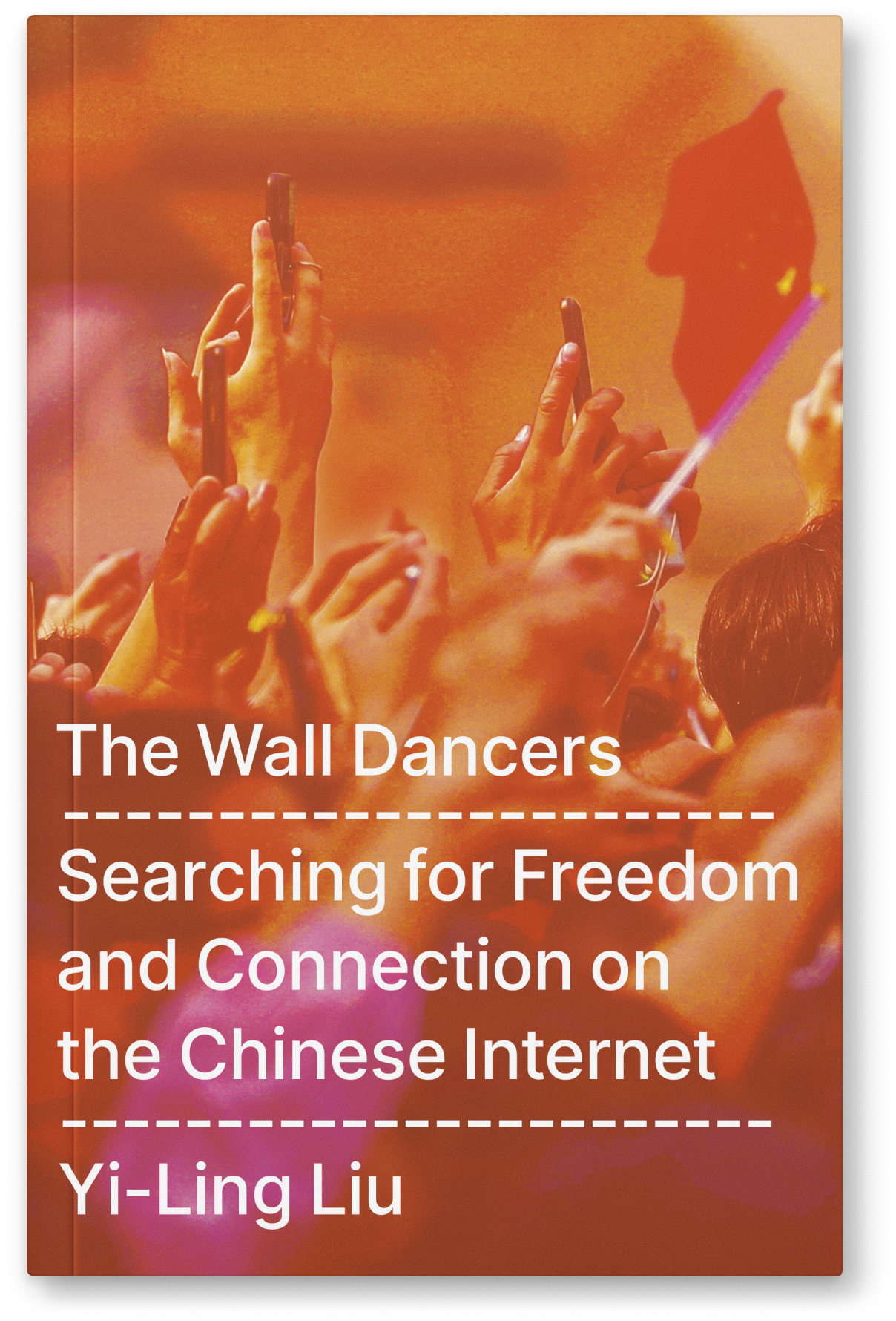
The Wall Dancers, published earlier this year, arrives at a time when everyone is obsessed with China. More than a few American statesmen and CEOs are anxious about China’s increased geopolitical and economic dominance. But their terminally online children and youthful staffers/employees, feverishly scrolling through Chinese short-form video, might proudly proclaim that they are “Chinesemaxxing,” though this Sinophilia tends “to remain surface-level,” Minh Tran writes, and is “more an appreciation of the aesthetic of Chinese culture than a consideration of its history, ideology, and values.”
But there’s a way to go deeper—and Liu’s meticulously researched, elegantly written book is an excellent way to understand contemporary Chinese culture with more depth, rigor, and sensitivity.
It’s an astonishingly accomplished book; in the last 2 months, I’ve had two conversations where I praised The Wall Dancers so extravagantly that the person I was speaking to bought a copy right after. Much of this is due to Liu’s rigorous reporting: she spent years reporting on everything from Chengdu hip-hop to the story of Blued, China’s version of Grindr. (You can read more about Blued in an earlier piece Liu wrote for the New York Times Magazine, “How a Dating App Helped a Generation of Chinese Come Out of the Closet.”)
But The Wall Dancers is also exceptional because of its impeccable narrative structure. The book is organized around a few key figures, including:
Ma Baoli, a closeted gay police officer who learned to accept himself after reading an influential web novel, Beijing Story (this is the opening chapter of The Wall Dancers, and both afra and I cried reading it) and later founded the gay social media app Blued, took it public, and then made the company private again
The influential feminist activist Lü Pin (towards the end of The Wall Dancers, Liu describes meeting a twenty-something social worker who said that “the woman she admired most in the world, a name I had heard repeatedly from feminists in China and across the diaspora: Lü Pin”)
(You can read Lü’s account of founding Feminist Voices, a pivotal media outlet for Chinese feminists, in a 2009 piece for Logic Magazine.)
The tech worker and sci-fi novelist Chen Qiufan/Stanley Chan, who won 12 Nebula awards5
Kafe Hu, a Chinese rapper in Chengdu, “a city known primarily among outsiders for its spicy food and large population of panda bears,” Liu writes—but also, as Liu began documenting, an “incubator of trap music”
A former Weibo censor whose growing disillusionment with state censorship led him to leak thousands of censorship directives (such as Reduce the volume of reporting on the Beijing flood. Insist on positive reporting. Do not make critical reports or commentary…) to a reporter at the Committee to Protect Journalists
It’s quite a challenge to bring together so many disparate stories, and combine them into a coherent, engrossing narrative of China’s political, economic, and cultural development over the last decade. But Liu does this with exceptional fluidity. Of course the content of the book is exciting—but it’s also a particularly useful book for writers trying to bring journalistic, historical, and personal narrative together. (Sometimes the best way to learn a craft—like nonfiction writing—is to study a work that has clearly mastered the form.)
And there are larger lessons in The Wall Dancers, too, especially around pursuing ambitious work under adverse political conditions. Near the end of the book, Liu describes how longtime activists responded to the White Paper protests in 2023, which “emerged during one of China’s most repressive eras.” As Lü Pin, burned out and exhausted by years of feminist organizing, wrote:
I reawakened to the basic fact that society never dies, that no one is one hundred percent submissive, and that people are always looking for a way to resist.
No midlife crises, but maybe some midlife uncertainties
I used to think that at a certain age—40, let’s say—you were meant to figure out your life. If you got it wrong, you would careen into a midlife crisis; if you got it right, you’d be rewarded with the perfect career, marriage, life.
But my fortysomething friends—even the fulfilled ones!—tell me that it’s not so easy. And two great contemporary novelists agree:
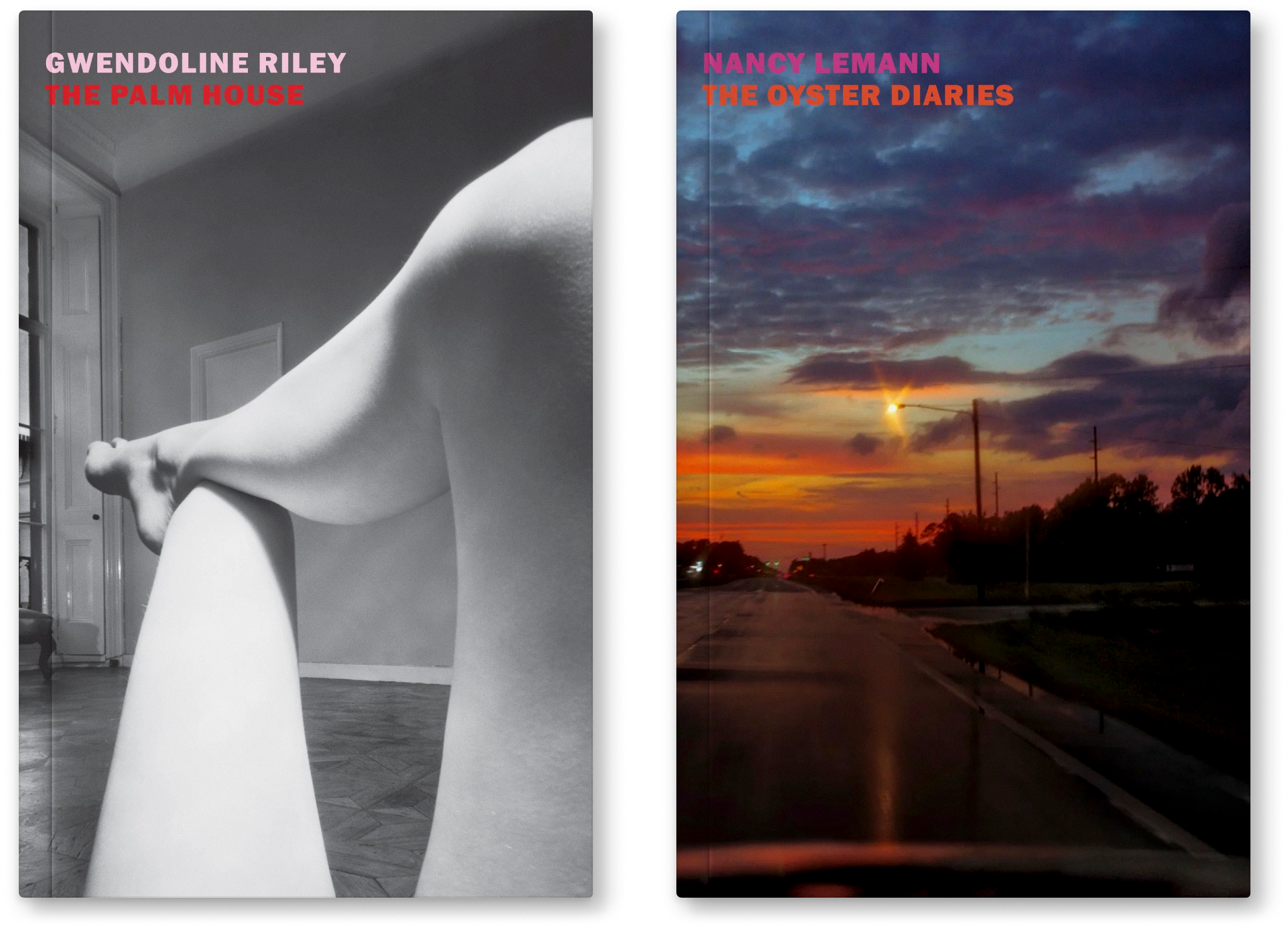
Gwendoline Riley’s The Palm House is about a great workplace being ruined (nearly) by an incompetent manager. This particular workplace is a London-based magazine, and this particular manager is an incoming editor-in-chief whose careless, idiotic ideas alienate Putnam, one of the magazine’s most tenured employees. And the magazine gets worse:
There were still good pieces in every issue, plenty to read, but there was a reliable quotient of dreck now: inane analysis, underthought and oversold.
But the novel isn’t told through Putnam’s eyes, but through the eyes of a longtime friend, Laura, who freelances for the magazine. Laura is sympathetic but clear-eyed about Putnam’s plight, especially since she can see how self-pitying he’s being:
Putnam and I would be talking about something else, and then, out of nowhere, and in the same mild, ironic tone of voice, he would say something annihilating.
‘Yes, so I’m a nobody now,’ he might say…Our conversations would keep landing there, when I least expected it: it was like falling through a trapdoor into a punishment cell…
‘Oh, nobody’s going to want me,’ he said…
‘You haven’t applied for anything,’ I said…
He didn’t want reassurance. He didn’t want sense. He didn’t want fellowship. He did not want a substantive conversation. I found it mind-bending, to be faced down by this wilful ignorance from one of the cleverest people I knew…Putnam was forty-nine! And as well as living, had he not spent a good proportion of those years reading, thinking, watching films? Had none of that given him an inkling of how to face life? Some model for elegant survival?
Laura has her own problems, in any case. She’s dredging up painful memories of her childhood, cautiously navigating her mother’s neuroses, and trying to find affordable housing. She is, in short, confronting all the ordinary problems of adult life—finely and penetratingly described in Riley’s remarkable style. (And the terrible manager, you’ll be relieved to hear, does get his comeuppance—although not every villain in this novel does.)
Riley is quietly but fiercely beloved by her readers, and reading The Palm House helped me understand why. She’s precise and insightful about the human condition, and this is obvious in the events she does, too, like a panel discussion earlier this year for the Toronto Public Library:
(My friend Laurel Clayton, one of the most prolific and insightful readers I know, sent this recording to me! She’s also one of the few people I know who actually co-bought a house with her friends in Toronto.)
I read Riley’s The Palm House alongside another novel of midlife reflection and discontent: Nancy Lemann’s The Oyster Diaries. The novel is a not-quite-sequel to Lives of the Saints, which I read earlier this summer—

—and the unnamed young woman of Lives of the Saints is now the middle-aged Delery Anhalt, living in Washington, DC but often returning (through Zoom calls and occasional vacations) to New Orleans, where she was raised. Lemann is obviously, openly remarkable as a writer, and The Oyster Diaries is full of deliciously comic descriptions. Here, for example, is Delery reminiscing about her mother:
A Yankee girl with high ideals transposed to New Orleans, she had to adjust to many alien dictates of the society surrounding her. Such as hosting an unnatural amount of parties…She was taught not only to give elaborate dinner parties, but their menus and seating arrangements she must record in a special leather-bound book so as not to embarrassingly repeat them for the same group…she dutifully filled out all the categories—the details diagrammed like strategic battle plans—concluding with General Remarks, where she would summarize the outcome:
“Food extraordinarily good. Conversation extraordinarily excruciating.”
And when it came to me—and/or the wastrel cohorts of my youth—she was one lone heroic soul who kept saying Pull yourself together, This is unacceptable.
If she saw a neurosis coming, she would draw her sword and prepare for battle.
The more I read of The Oyster Diaries, the more strikingly useful this attitude seemed to be. Delery is a charming narrator, and an embattled one: her teenage daughters are affectionate but highly opinionated; her volunteer work as a criminal court monitor puts her in contact with the racial and class divides of New Orleans; and her husband and friends keep on carelessly creating conflict in her life. Oblique statements, such as—
The trouble with the weak is that you have to protect them. The strong don’t need to be protected. The weak take advantage of you—not necessarily even deliberately or consciously but through lack of tact, lack of insight. And after they have taken advantage of you, then you have to protect them.
—are followed by painful, illuminating explanations of exactly who has transgressed, and why, and how Delery must respond. Her life is full of awkward compromises and reconciliations; it’s also shaped by her unwavering commitment to acting heroically, with integrity, with maturity. The novel reminded me that life’s ongoing struggles are a chance to test yourself, to see what’s possible. To see if you’re courageous enough to keep on going.
I haven’t sent out a newsletter in a while, and writing this made me realize how much I missed it! But while things have been quiet here:
I shipped all my worldly possessions, including 400-ish books, across the Atlantic (I’m leaving London and spending the next year in NYC!)
I spoke to Kyle Chayka, the New Yorker columnist and author of Filterworld and The Longing for Less, about the visual design details that Claude is turning into clichés:
 celine nguyen 📖 ◡ 📖@mynameiscelineubiquitous AI usage has made everyone paranoid about em dashes in writing…what’s the equivalent for Claude-designed websites and apps? I spoke to @chaykak for his insightful column on AI design aesthetics + why modernist “good design” details are starting to feel like slop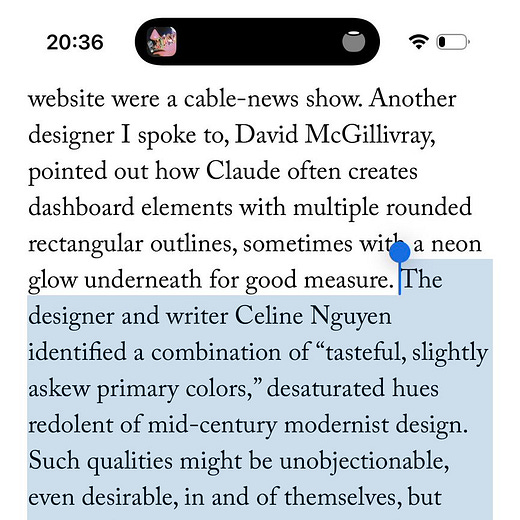
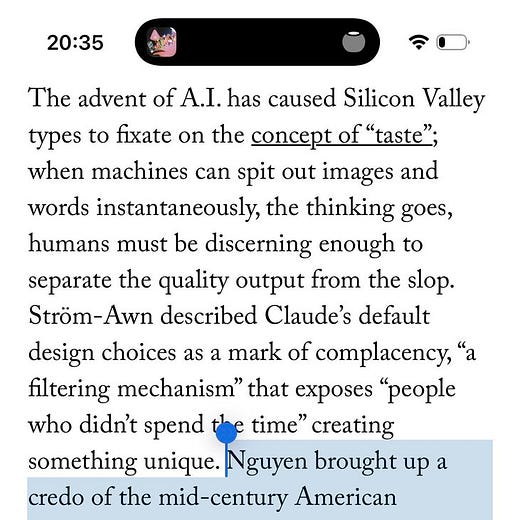
 Kyle Chayka @chaykakBeige backgrounds, rust-red text, overzealous italics and underlining, pointless news tickers — I wrote about the increasingly annoying generic style of Claude Design websites and AI-induced homogeneity for my @NewYorker column7:44 PM · Jun 24, 2026 · 4.21K Views4 Replies · 1 Repost · 45 Likes
I also spoke to Constance Grady, Vox’s culture correspondent, about how to stop scrolling through social media and instead use the internet to do something more exciting!
Writer and tech designer Celine Nguyen has written about letting her curiosity guide her down rabbit holes in her essay on “research as leisure activity,” a phrase she borrowed from librarian Karly Wildenhaus…
I loved speaking to Grady, who regularly writes insightful articles on fashion consumption and personal style; what’s actually irreplaceable about human-made art; and how to write honestly about beauty.
I taught 2 workshop/class-shaped things in NYC and Idyllwild, CA:


The number one reason this newsletter has been quieter, though, is: From April to June, I began working on the most ambitious essay I’ve ever attempted, in style and argumentation.
Because I wanted to push myself as a writer (and because I was still working full-time!) I had to ruthlessly prioritize. Writing in public, as Marlene Jo observed earlier this year, can:
remov[e] you from the slower and unrewarding work that allows you to form a more interesting and complex understanding of things. The more I privately journal the better my public stuff gets. The private stuff is important because it’s the only place you can contend with the truth.
My essay comes out on Wednesday with Asterisk Magazine, where I was edited by Clara Collier and Angela Chen. I had a really exceptional editing experience, and I feel I’ve become a much better writer and thinker because of them.
If you’re in NYC on September 2, please join me, Clara, and Angela for an Asterisk x personal canon meetup in Park Slope—and RSVP on Partiful!
And if you’re not in NYC, I’ll be returning to a weekly-ish (okay, maybe twice-monthly) newslettering schedule in the coming months. Thank you for reading, as always, and I’ll be back in your inbox soon!
The history of American yuppies is, as Dylan Gottlieb repeatedly stresses, a history of partial and incomplete diversification:
Under 1 percent of partners at the largest law firms were Black and fewer than one in ten were female. There were so few Black partners in New York in the mid 1980s that each time one more joined the club, all of them—no more than seven in the entire city—met for a celebratory lunch. As one attendee admitted, “We don’t have a very big table.”
Greater diversity among the professional elite also coincided with greater economic inequality for the rest of America. And Gottlieb argues that many yuppies in law and finance “were the very people doing the work of deindustrializing the country…[and] merging, offshoring, or otherwise squeezing short-term value out of companies that had once offered meaningful security to their employees and other stakeholders.”
As soon as I finished the book (during my morning commute), I wrote the following messages:


Here are 2 posts from Currey’s archives that I return to often:
“Step into your heroic period,” from June 2025, which is about:
a stretch of time in some lives, perhaps in all lives, when we get to a higher level of something: of discipline, productivity, creativity, insight, intellectual power, cultural relevance, or maybe all the above at once. And what I want to suggest…is that we all have the option to step into our own heroic periods when we really need them.
“John Cage on the true meaning of discipline,” from the same month, where Currey offers a fresh way to think about self-discipline:
Discipline is not a virtue that some people possess and others lack…nor is it a muscle to be exercised and strengthened over time. Rather, it is giving yourself over to something. It is not about exerting self-control; it’s about surrendering control…For those of us pursuing creative projects, Cage’s framing suggests a tantalizing possibility: Making art—it’s not about you! Or shouldn’t be. Instead, it’s about giving yourself to a project, and then giving the project to others.
Self-expression is certainly part of creativity! But it may be, Currey suggests, “a much smaller part than we were led to believe.”
I also liked this New Yorker interview with Bajani, where he describes the themes of his novel—
Family, as a theme, brings with it two elements that raise the temperature of any story: politics, and our most primordial emotions, which is pretty much everything that interests me in literature.
—and offers this touching note about his translator:
Receiving Geoffrey Brock’s translation of the novel was a true revelation…when I read it, I thought, This…is the actual novel I wanted to write but, for language reasons, couldn’t…Geoff’s version seemed to me the original, not a translation. And this epiphany led to another important realization: that I had written this novel—in Houston, where I live—with American readers partly in mind. This means that I had instinctively been trying to draw out of this “Italian story” something more universal, something that, while it certainly concerns my country, might also, in some measure, concern anyone else.
One of the fascinating things about reading nonfiction books about artists/writers is realizing how tight-knit many of these communities are! Chen Qiufan/Stanley Chan, for example, has also influenced the literary careers of Ken Liu and Liu Cixin:
After Stanley asked for translation advice, Ken [Liu] offered to translate one of his short stories into English. That small, serendipitous idea would kickstart Ken’s role as the preeminent English translator of Chinese sci-fi after Stanley recommended him as a translator for a friend, the science fiction writer Liu Cixin…Ken was blown away by the story, which spanned from the Cultural Revolution to the end of the universe, and signed a contract to bring The Three-Body Problem to a global readership
The quote upfront about effectively extending our life through reading and your Proust mention led me to find and recall this passage in Swann's Way:
A 'real' person, profoundly as we may sympathise with him, is in a great measure perceptible only through our senses, that is to say, he remains opaque, offers a dead weight which our sensibilities have not the strength to lift. If some misfortune comes to him, it is only in one small section of the complete idea we have of him that we are capable of feeling any emotion; indeed it is only in one small section of the complete idea he has of himself that he is capable of feeling any emotion either. The novelist's happy discovery was to think of substituting for those opaque sections, impenetrable by the human spirit, their equivalent in immaterial sections, things, that is, which the spirit can assimilate to itself. After which it matters not that the actions, the feelings of this new order of creatures appear to us in the guise of truth, since we have made them our own, since it is in ourselves that they are happening, that they are holding in thrall, while we turn over, feverishly, the pages of the book, our quickened breath and staring eyes. And once the novelist has brought us to that state, in which, as in all purely mental states, every emotion is multiplied ten-fold, into which his book comes to disturb us as might a dream, but a dream more lucid, and of a more lasting impression than those which come to us in sleep; why, then, for the space of an hour he sets free within us all the joys and sorrows in the world, a few of which, only, we should have to spend years of our actual life in getting to know, and the keenest, the most intense of which would never have been revealed to us because the slow course of their development stops our perception of them. It is the same in life; the heart changes, and that is our worst misfortune; but we learn of it only from reading or by imagination; for in reality its alteration, like that of certain natural phenomena, is so gradual that, even if we are able to distinguish, successively, each of its different states, we are still spared the actual sensation of change.